Pierre ANCTIL – Head of Research for the Dynamics of Cohabitation axis
 Pierre Anctil is a full professor in the history department at the University of Ottawa where he teaches contemporary Canadian history and Jewish Canadian history. In April 2002, he was named as president of the Council of Intercultural Relations (Conseil des relations interculturelles), a consulting body for the government of Quebec that is responsible for advising the Minister of Citizens Relations and Immigration (Ministre des relations avec les citoyens et de l’immigration). He served as the director of the Institute for Canadian Studies at the University of Ottawa from July 2004 until July 2008. In 2008, he received the Killam Grant (research for two years at a time) for a research project entitled: “Parcours migrant, parcours littéraire canadien : le poète yiddish Jacob-Isaac Segal”. Anctil holds a doctorate degree in social anthropology from the New School for Social Research in New York (1980) and did a postdoctoral fellowship at the department of Jewish Studies at McGill University (1988-1991). In 2000, he received a second graduate degree in international management from the National School of Public Administration (École nationale d’administration publique).
In 2010, he published: Fais ce que dois, 60 éditoriaux pour comprendre Le Devoir sous Henri Bourassa, 1910-1932 (Éditions du Septentrion) and Trajectoires juives au Québec (Presses de l’Université Laval). In collaboration with Ira Robinson, he published a collective work in 2010 entitled: Les communautés juives de Montréal, histoire et enjeux contemporains (Éditions du Septentrion). In 2011, he published a collective work in collaboration with Howard Adelman entitled: Religion, Culture, and the State, Reflections on the Bouchard-Taylor Report (University of Toronto Press). In 2012, he published: Jacob-Isaac Segal (1896-1954), un poète yiddish de Montréal et son milieu (Presses de l’Université Laval, 2012). In 2013, he published: ‘Soyons nos maîtres’, 60 éditoriaux pour comprendre Le Devoir sous Georges Pelletier, 1932-1947 (Sillery, Éditions du Septentrion, 2013), and in 2014 : ‘À chacun ses Juifs’, 60 éditoriaux pour comprendre la position du Devoir à l’égard des Juifs, 1910-1947 (Sillery, Éditions du Septentrion, 2014). In 2015, in collaboration with Simon Jacobs, he published: Les Juifs de Québec, 400 ans d’histoire (les Presses de l’Université du Québec, 2015). His most recent publication, in collaboration with Tonu Onu (translation), is entitled ‘Do What You Must’ : Selected Editorials from Le Devoir under Henri Bourassa, 1910-1932 (Toronto, Publications of the Champlain Society no. 77, 2016)
Email: [email protected]
Daniel CÔTÉ – Head of Research for the Intervention and Organizational Issues axis
 Daniel Côté is a researcher with the rehabilitation team at the Institut de recherche Robert-Sauvé en santé et en sécurité du travail (IRSST). In 2007, he received his doctorate degree in anthropology (with a focus in medical anthropology) from the University of Montreal. His thesis was on rituals of possession and exorcism in South Asia and explored issues related to social organization, healing and spirituality. Since 2005, he has worked in the field of employment health and security. More specifically, he is interested in studying the social determinants of disabilities and representations of pain. In 2010, he published a survey of works on the impact of gender differences on the rehabilitation process in the British journal Disability & Rehabilitation. By presenting gender constructs as the result of sociocultural learning and a range of interactions, the article highlights situations in which the phenomenon of the work-family double bind can have an influence on or serve as an obstacle to the workforce reintegration process. The article was recognized by the journal’s editorial committee with the Best Review Award 2010. Since 2011, Côté has been an associate professor in the anthropology department at the University of Montreal and a regular research fellow in the METISS team (Migration, Ethnicité et Interventions dans les services sociaux et de santé) at the CSSS de la Montagne. In this occupation, he collaborates with other researchers and students to develop a research program focused primarily on immigrant and ethnic minority workers. This research axis aims to develop pedagogical tools for facilitating intercultural dialogue and communication in clinical settings. Côté is currently finishing an article on workplace rehabilitation in which he explores the implementation of institutional measures for assisting case workers in their development of intercultural skills in the context of the social realities of present day Quebec.
Email: [email protected]
Jessica DUBÉ – Lab Coordinator
 Jessica Dubé holds a Master’s degree in human resources and is a doctoral candidate in interdisciplinary studies of health and society at the University of Quebec in Montreal (UQÀM). She is also a lecturer in human resources for a number of university programmes. Her scientific and career interests focus primarily on healthcare management and workplace security. In the past several years, she has been interested in the ways in which workers’ health can contribute to a range of challenges such as the fight against health-related inequalities due to employment conditions. More specifically, her doctoral research is about preventative practices among workers at an employment agency. She recently published an article on this subject in the journal Perspectives interdisciplinaires sur le travail et la santé: https://pistes.revues.org/3911. Dubé also works as the coordinator and a research assistant at the Institut de recherche Robert-Sauvé en santé et en sécurité du travail (IRSST) on a project piloted by Daniel Côté, a researcher at the LABRRI, entitled “Comprendre le processus de réadaptation et de retour au travail dans le contexte des relations interculturelles”.
Email: [email protected]
Lomomba EMONGO – Head of Research for the Intercultural Epistemologies axis
 Lomomba Emongo earned a doctorate in philosophy and humanities from the Université Libre de Bruxelles after a long research residency at the Ruprecht Universität Heidelberg (RFA). He also studied culture and religion at the Université Libre de Bruxelles and has a diploma in special studies in African religions and philosophy from the Université catholique du Congo. He is a lecturer in the Institute for Religious Studies at the University of Montreal and a professor of philosophy at the Cégep Ahuntsic. He was a researcher in the field of intercultural studies for 7 years at the Institut interculturel de Montréal, where he is still on the writing and editorial board for the journal InterCulture. Emongo is regularly consulted by various organizations for his expertise in intercultural communication (l’Aide juridique de Montréal, la Table de concertation pour les organismes au service des personnes réfugiées et immigrantes, la Corporation culturelle latino-américaine de l’amitié, la Maison internationale des femmes, le Centre d’encadrement pour jeunes filles immigrantes, l’Alliance des communautés culturelles pour l’égalité dans la santé et les services sociaux, etc.). He is a former grant recipient of the MISSIO, of the Deutscher Akademischer Austauschdienst and the Canada Council for the Arts. He is also a versatile writer who has published a number of articles, book chapters, monographs and novels that have been awarded literary prizes in his native Democratic Republic of Congo.
Email: [email protected]
Jorge FROZZINI – Head of Research for the Social and Media Representations axis
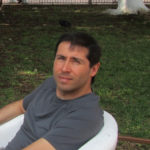 Jorge Frozzini (Ph.D. from McGill University in 2011) is a professor at the University of Quebec in Chicoutimi (UQAC) and the head of research for the LABRRI’s Social and Media Representations axis. He is the member of a number of research groups and is active in the community sector where he advocates for and defends the rights of (im)migrants. His first research projects focused on popular music as a form of knowledge and symbolic unity/collectiveness. Later, he turned his attention to the political and theoretical aspects of communication and particularly the social dynamics and forms of power involved in the encounter. Since 2011, he has been interested in the sociopolitical and legal structures as well as the social representations affecting (im)migrants and temporary foreign workers. In 2015, he published “Travail migrant temporaire et précarisation” (Vie économique) and in the fall of 2017 a book in collaboration with Alexandra Law entitled “Immigrant and Migrant Workers Organizing in Canada and the United States: Casework and Campaigns in a Neoliberal Era” (Lexington Books). Frozzini currently studies the connection between the social representation of (im)migrants and their democratic and political participation in Canada.
Email: [email protected]
Danielle GRATTON – Head of Community Services
 Danielle Gratton, trained both as a psychologist (M.Ps.) and an anthropologist (M.Sc.), is the founding director of the Centre d’étude et d’intervention en relations interculturelles (CEIRI). The CEIRI is a resource service that various institutions have used to support the programme-framework L’approche clientèle dans un contexte interculturel developed by the Minister of Health and Social Services. With extensive experience abroad, she has participated in the intercultural competency training of more than 4,000 people from the education sector, health and social services as well as the community and legal sectors. Gratton’s work focuses on the creation of intercultural spaces and the implementation of condition that facilitate harmonious intercultural encounters and relations. She also seeks to support institutions and organizations by helping service actors who are confronted with challenging situations in which cultural differences and misunderstandings make it impossible for them to reach their normal goals and expectations and to conduct everyday tasks. In 2010, she published the book “L’interculturel pour tous” (Éditions St. Martin).
Email: [email protected]
François ROCHER – Head of Research for the Public Policy and Frameworks axis

François Rocher (Ph.D. Université de Montréal, 1987) is a full professor at the School of Political Studies at the University of Ottawa. His courses focus on the Canadian political system, federalism and citizenship. He is the co-director of the Canadian Journal of Political Science, a board member of the Canadian Political Science Association and the president of the Société québécoise de science politique. He was previously a professor in political science at Carleton University from 1990 to 2006 and he served as the director of the School of Canadian Studies there from 2002 to 2005. In 2006, he joined the chool of Political Studies at the University of Ottawa where he served as the director from 2008 to 2013 and the interim director from 2014 to 2015. Rocher’s research interests focus on issues related to multiethnic and multinational diversity, citizenship, constitutional politics, Canadian federalism and Quebecois nationalism. He has published a number of works (including Guy Rocher. Entretiens, Montréal, Boréal, 2010) and has codirected more than ten collective works including Le nouvel ordre constitutionnel canadien. Du rapatriement de 1982 à nos jours (2013), La dynamique confiance / méfiance dans les démocraties multinationales (2012), The State in Transition. Challenges for Canadian Federalism (2011), Immigration, diversité et sécurité: les associations arabo-musulmanes face à l’État au Canada et au Québec (2009). Rocher has published many articles concerning the political dynamics of diversity management, Canadian multiculturalism and Quebecois interculturalism. He has written more than 125 chapters for collective works and scientific journals. He is a founding member of the Groupe de recherche sur les sociétés plurinationales (GRSP) and is a regular research fellow at the Centre de recherche interdisciplinaire sur la diversité et la démocratie (CRIDAQ) at the University of Quebec in Montreal.
Francine SAILLANT
 Francine Saillant is professor emeritus at the anthropology department of Laval University (Quebec City) and the parting director of the CÉLAT (2009-2015) and the Centre de recherche sur les arts, cultures et sociétés (2009-2015). She was the director of the journal Anthropology and Society for 10 years (2000-2010). Saillant has published as the single author and in collaboration nearly 30 books on a variety of anthropological themes, including Identités et handicaps (Karthala, 2007), Le manifeste de Lausanne (avec Mondher Kilani, 2011), Le mouvement noir au Brésil (Academia, 2014), Droits et cultures en mouvements (PUL, 2012), Pluralité et vivre ensemble (PUL, 2015) and Diversity, Dialog, Sharing (Unesco, 2017). She specializes in the anthropology of human rights and has lead research on discrimination based on race as well as a range of other forms of discrimination based on the social construction of difference. Her work is interested in the range of uses and interpretation of notions of justice and rights and, more generally, the social life of rights. She is also interested in the fields of interculturality and the use of art in the human and social sciences. She is a member of several national and international research networks. She has collaborated with a range of civil society organizations on questions concerning intercultural dialogue and recognition. Since 2012 in particular, she has worked on the project InterReconnaissances, a project supported by a team of researchers who examine the memory of rights in Quebec’s community sector over the past 50 years. She is a member of a number of prestigious scientific organizations including the Royal Society of Canada and is a member emeritus of the Canadian Society of Anthropology. Finally, she takes part in the work of the committee for UNESCO’s International Decade for the Rapprochement of Cultures.
Bob W. WHITE – Lab Director and Head of the Montréal ville interculturelle Partnership
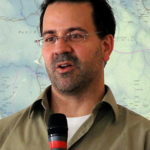
Bob W. White is a professor in the Department of Anthropology at the University of Montreal and Director of the Laboratory for Research on Intercultural Relations (LABRRI). Since 2012, he has led a multi-sectoral research partnership focused on the dynamics of inclusion in Montreal’s urban spaces (« Montreal Intercultural City », SSHRC 2012-2020). He is the coordinator of the Network of Municipalities for Immigration and Intercultural Relations of Quebec (RÉMIRI) and a member of the G3 inter-university research network on migration (University of Montreal, University of Geneva, Université Libre de Bruxelles). Bob White has been a visiting professor at the École des hautes études en sciences sociales (EHESS) in Paris, at the University of Cheikh Anta Diop (UCAD) in Dakar and at the Max Planck Institute in Gottingen. He has published extensively on popular music, globalization, cultural policies, collaborative methods, pluralism, public policy and intercultural communication. In 2014, he published « L’interculturel au Québec: rencontres historiques et enjeux politiques » (Presses de l’Université de Montréal) with Lomomba Emongo. His latest book, published in 2018, is entitled Intercultural Cities: Policy and Practice for a New Era (London: Palgrave McMillan). He is currently working on a general theory of intercultural communication grounded in anthropological thought.
Email: [email protected]